I try to write my posts as unbiased as possible and recommend the products I consider to be useful and the best. I use affiliate links, this means that–at no extra cost to you–I can make a commission on a purchase you make after clicking on them. As an Amazon Associate I earn from qualifying purchases.
Stop Puppy Biting in 3 Easy Steps
(No Yelling or Time-Outs)
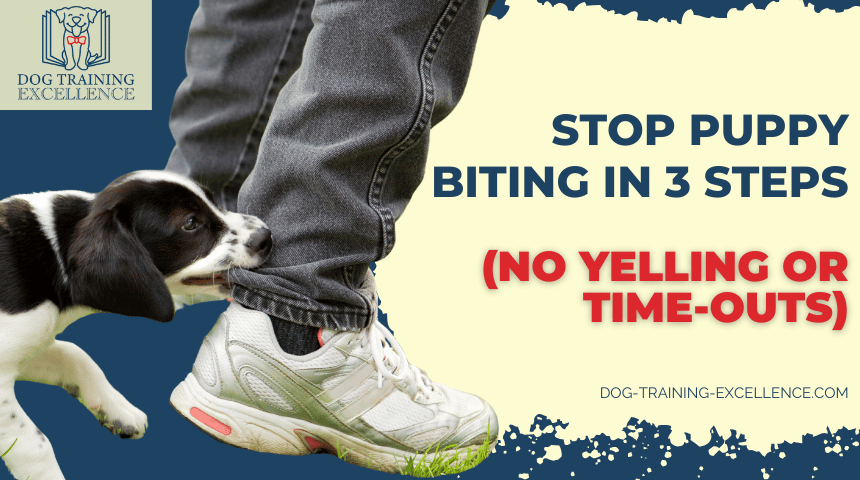
Tired of feeling like your puppy’s favorite chew toy? Learn how to stop puppy biting gently and teach your little one to control those sharp teeth. No yelling, no fear, just science-based strategies that turn chaos into calm and playtime into bonding time.
Article Highlights:
Why Your Puppy Bites
(and What’s Happening in Their Brain)
Puppies bite because that’s how they explore, play, and learn about the world. It’s completely normal. Just like human babies, puppies experience a teething phase where chewing relieves discomfort and helps new teeth come in.
Biting also plays a big role in social learning. When littermates bite too hard, the other puppy yelps and ends the play, teaching that there are limits. Without littermates, your job is to continue that lesson gently and consistently.
From a neuroscience point of view, your puppy’s self-control system is still under construction. The areas of the brain that regulate impulse control (prefrontal cortex) mature slowly. That’s why puppies act before they “think.” During exciting play, their brain releases dopamine and adrenaline, making them even more energized, and more likely to nip. The good news? Each calm, reward-based interaction you have helps their brain build pathways for self-regulation. You’re literally shaping their mind toward gentleness!
Recommended Bite Training Hacks
There aren’t many true “hacks” in dog training. In fact, we positive dog trainers are proud that the fewer “tools” we use, the better our technique is! No remote collars, no special leashes, nothing electronic, we can make magic with just a clicker and some treats.
But I know you’re busy and just adopted an energetic puppy. The truth is, puppies have real needs, and the need to bite and chew is one of the strongest. If your puppy doesn’t have appropriate toys to sink those little teeth into, your skin and furniture will pay the price! Below are some of my favorite toys to help calm an energetic puppy and satisfy that natural chewing urge.
 |
 |
 |
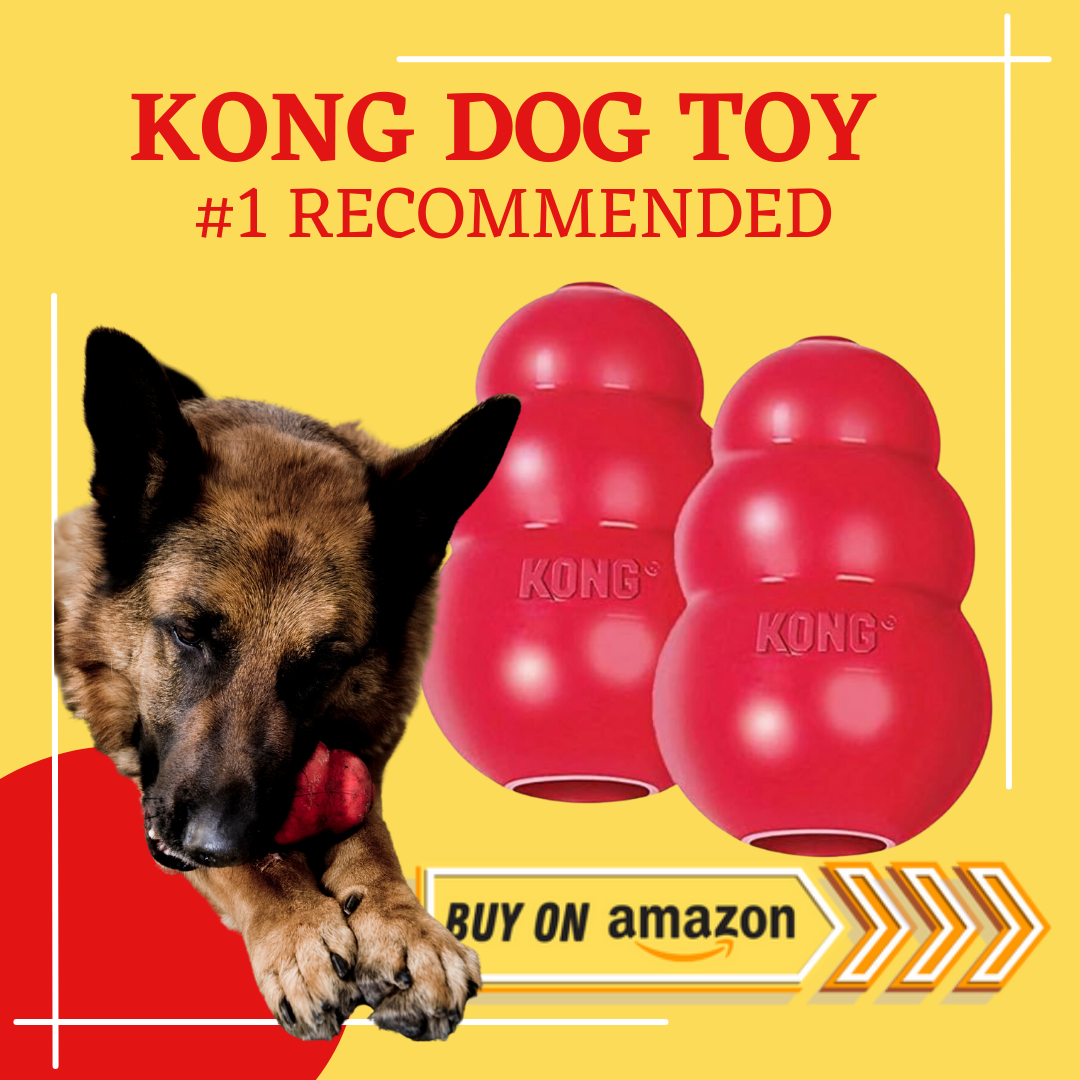
Kong Puppy Toy
This is the most recommended dog toy by professional trainers. I’ve been recommending it for over 10 years, and it’s still one of my all-time favorites! The KONG toy is designed for dogs to chew safely, and it’s also wonderfully interactive, you can fill it with your puppy’s meals or treats to make feeding time an engaging activity that helps burn energy and build focus. KONG makes many great toys, but the KONG Classic is the perfect place to start.
Benebone Puppy Wishbone Chew Toy
As I mentioned above, your puppy has a biological need to chew. That means your house should look like a minefield of puppy chew toys, your little one should be able to find something appropriate to chew every few steps! Don’t panic, this phase doesn’t last forever. As your puppy grows, their need to chew will gradually decrease (and so will the number of toys scattered around). I love the Benebone Wishbone chew toys because they’re flavored, which makes them extra appealing and helps your puppy choose them over your furniture.
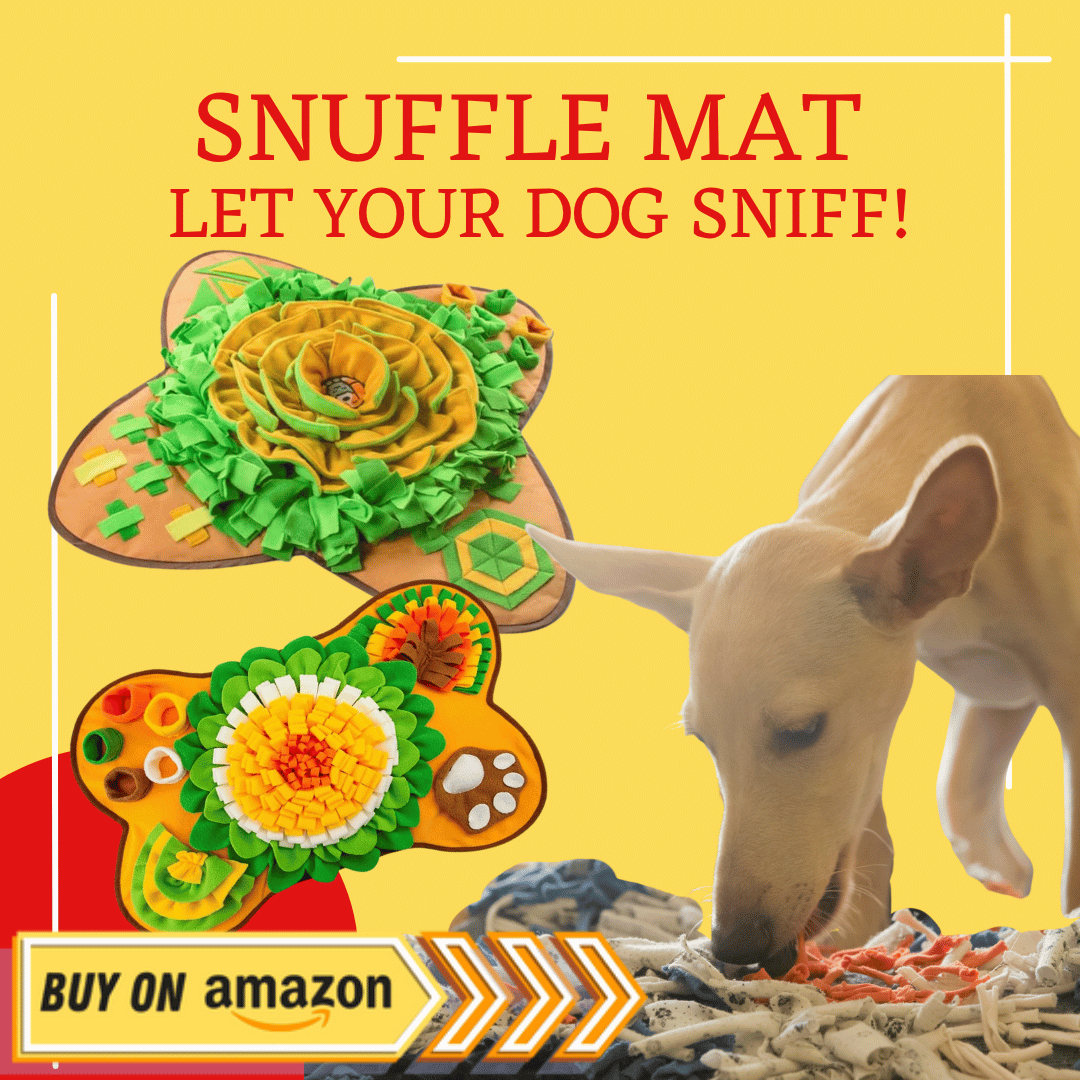
Snuffle Mat for Puppies
Okay, this isn’t technically a chew toy, but it’s an activity toy that encourages your puppy to use their nose to find food. It’s a fantastic way to feed your puppy with a double benefit: it helps burn energy and promotes relaxation through scent work.
Important: This activity requires supervision and a bit of learning. Place the snuffle mat on the floor with some kibble or treats and watch to make sure your puppy is sniffing and searching, not chewing on the mat! Once all the food is gone, pick up the snuffle mat, clean it, and store it somewhere safe.
If your puppy starts chewing the mat, gently redirect them back to sniffing, and try using extra-tasty treats to keep them focused on the game!
Disclosure: As an Amazon Associate, I earn from qualifying purchases. I only recommend products I personally (or my clients) use and trust.
The Secret to Stopping Puppy Biting
Your puppy won’t learn bite inhibition overnight, it can take several weeks of consistent practice before you start noticing that those little teeth no longer hurt.
Most new puppy parents focus on stopping the biting, but professional trainers know there’s something even more important, teaching bite inhibition.
Bite inhibition means your puppy learns how to control the pressure of their mouth, not just to stop using it. It’s the skill that helps dogs play gently with humans, other dogs, and even small children without causing harm. Puppies who learn this early grow into calm, trustworthy adults who understand how to use their mouths appropriately.
Here’s how to teach bite inhibition gently and naturally:
-
Stop play the moment your puppy bites too hard.
Freeze for a second or gently say “ouch!” in a calm tone, then stop interacting. The goal isn’t to scare them, it’s to give feedback that the fun stops when teeth touch skin. -
Wait for calm.
As soon as your puppy pauses, licks, or looks at you softly, take a breath together. That short pause helps lower arousal and teaches self-control, an early form of emotional regulation. -
Resume play when gentle.
Return to playing or petting right away. This shows your puppy that gentle mouths keep the game going, while hard bites end the fun.
This process mirrors what happens between littermates: when one puppy bites too hard, the other yelps and walks away. Through these repeated social feedback loops, puppies learn to regulate bite pressure. You’re simply continuing that natural learning process, and helping your puppy’s brain form connections between impulse control and positive outcomes.
Teaching bite inhibition isn’t just good manners, it’s brain training! Each calm repetition strengthens neural pathways for self-control, turning a nippy puppy into a polite companion.
Tips for Bite Inhibition Training
Teaching your puppy to control their bite isn’t hard, but consistency and calm make all the difference. Here are some trainer-approved tips to help your puppy learn faster and keep everyone’s fingers safe!
🏡 1. Make sure the whole family is on the same page
Everyone who interacts with your puppy needs to follow the same rules. If one person yells “ouch!” and another laughs or lets the puppy keep biting, your puppy will get mixed messages. Consistency builds clarity, and clarity builds confidence!
🙊 2. Stay calm and avoid yelling
When you yell, wave your arms, or jump away dramatically, your puppy’s brain thinks, “Game on!” That reaction triggers their predatory chase instinct, making them even more excited to bite. Instead, freeze calmly for a moment, then redirect to a toy. Calm energy teaches calm behavior.
🧸 3. Always have chew toys nearby
Puppies need something appropriate to sink their teeth into. Keep toys in every room so you can quickly redirect biting to a toy instead of your hands or clothes. This builds a clear association: hands are for love, toys are for chewing.
🧠 4. Watch for over-arousal
If your puppy gets too excited, stop play and give them a short break. Over-arousal floods their system with adrenaline, making self-control nearly impossible. A sniffing game can help reset their brain chemistry and calm them down.
❤️ 5. Reward gentle mouths
Whenever your puppy plays softly or stops before biting, mark and reward that moment! You’re reinforcing the exact behavior you want to see more of.
🚫 6. Avoid punishment
Never hold your puppy’s mouth shut or tap their nose. Punishment can cause fear and break trust, plus, it doesn’t teach your puppy what to do instead. Positive reinforcement works faster and strengthens your bond.
⚠️ Real-Life Puppy Story
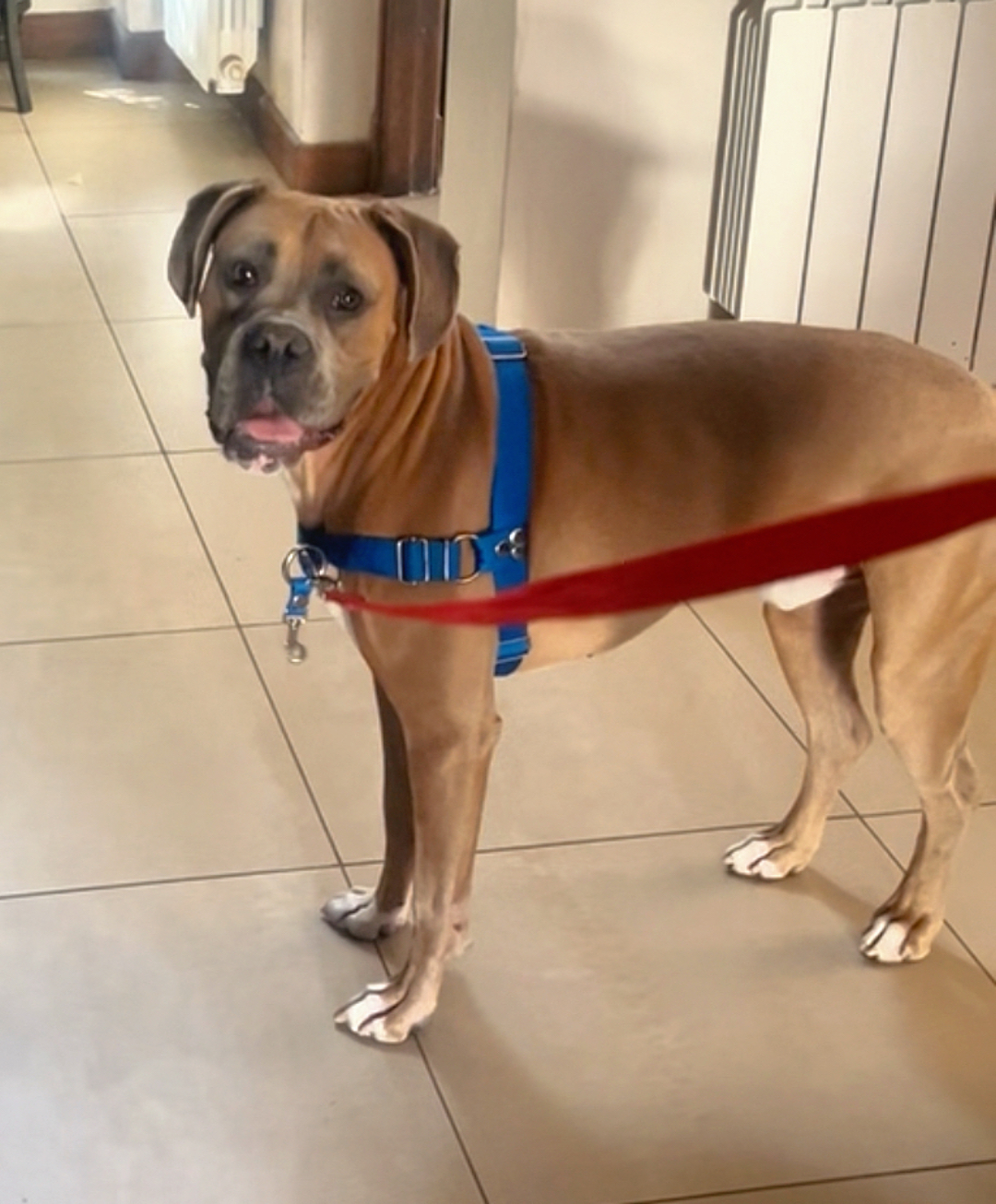 This is Cooper, for most of the classes he was always on a leash for safety reasons. After 6 sessions he started to relax and began to trust people again.
A family once called me for help with their young dog who had started showing aggression toward people. When I arrived, I immediately noticed that the dog became tense and defensive whenever someone moved their hands too quickly. Even a simple gesture like reaching to pet him made him growl and snap.
When I asked about his early training, the owners admitted that as a puppy, they had been told to stop his biting by hitting his muzzle or holding his mouth shut. And it worked, he stopped biting them. But what he really learned was to fear hands.
This is one of the most dangerous lessons a dog can learn, because we humans use our hands for everything, reaching, greeting, comforting, and playing. A fearful dog may not bite their trusted owner, but when a stranger or a child approaches with their hands, instinct takes over, and they may defend themselves with a bite (even if there is no real threat, it feels like one to them).
Rebuilding trust after this kind of fear takes months of gentle, positive work and careful management to keep everyone safe. That’s why I always say: never, ever hit, slap, or hold your puppy’s mouth shut. It’s not worth the risk, and with positive methods, you can teach your puppy to be gentle without creating fear.
When It’s More Than Play
Most puppy biting is harmless play, but sometimes those sharp little teeth signal something deeper. If your puppy growls, snaps, or bites when you reach for them, remove a toy, or touch certain areas, you may be seeing frustration biting or fear biting rather than playful nipping.
Fear biting often appears when a puppy feels cornered or overwhelmed, ears back, tail tucked, body stiff, or avoiding eye contact. Frustration biting, on the other hand, can happen when a puppy wants something but doesn’t yet know how to cope with the feeling of being blocked or restrained. Both behaviors are signs of stress, not stubbornness.
It’s important to remember: puppies don’t bite out of spite or anger. They bite because they’re communicating discomfort, confusion, or anxiety the only way they know how. Their brains are still developing emotional control, and with gentle, positive guidance, they can learn safer ways to express themselves.
If your puppy’s biting feels intense, unpredictable, or frightening, reach out for help, my NeoPuppy Online course comes with 80+ video tutorials and 4 online private coaching sessions with me.
Calming a Biting Puppy:
Train the Brain for Gentle Play
When your puppy gets too wound up, biting often follows. Most nipping happens not because your puppy is “bad,” but because they’re over-aroused — their little brain is flooded with excitement, frustration, or fatigue, and self-control temporarily goes offline.
Recognizing those moments early is key. If your puppy suddenly goes from playful to wild-eyed, zooming, or biting harder, it’s time to pause. Puppies can only handle short bursts of stimulation before their nervous system needs a break. Over-arousal releases adrenaline and cortisol, making calm thinking impossible.💤 Calming Techniques That Work
Help your puppy reset their brain with simple, positive activities that lower arousal and boost focus:
- Sniffing games: Scatter a handful of kibble in the grass or on a snuffle mat. Sniffing triggers the parasympathetic (“rest and digest”) system and helps your puppy relax.
- Scatter feeding: Replace the food bowl with a mini treasure hunt — it engages the nose, slows eating, and encourages calm focus.
- Calm mat training: Teach your puppy that their mat means “chill time.” Reward any moment of calm lying down with a soft “yes” or click and a treat.
- Structured naps: Puppies need 16–20 hours of rest per day. A tired brain learns poorly — rest is part of training!
Calm touch also releases oxytocin, the “bonding hormone,” in both you and your dog. That’s why gentle petting, slow breathing, and calm presence can instantly help your puppy feel safe and bite less.
🎯 Brain Games to Build Self-Control
Once your puppy is calmer, channel that energy into mental exercise. Brain games teach focus, patience, and emotional regulation — the building blocks of a well-behaved adult dog.
Try these easy games at home:
- “Leave It” and “Take It” — Strengthens impulse control by teaching your puppy that waiting calmly brings rewards.
- Tug with Rules — Play tug, but ask for a “drop it” mid-game. When your puppy releases, start playing again! It teaches that cooperation keeps the fun going.
- Find It! — Hide treats under cups or around the room to engage their nose and brain in problem-solving.
Each time your puppy pauses, waits, or chooses calm over chaos, their brain’s self-regulation pathways strengthen. It’s not just good manners — it’s neuroscience in action!
🐾 A Little Trainer Story: "The Calm-Down Miracle"
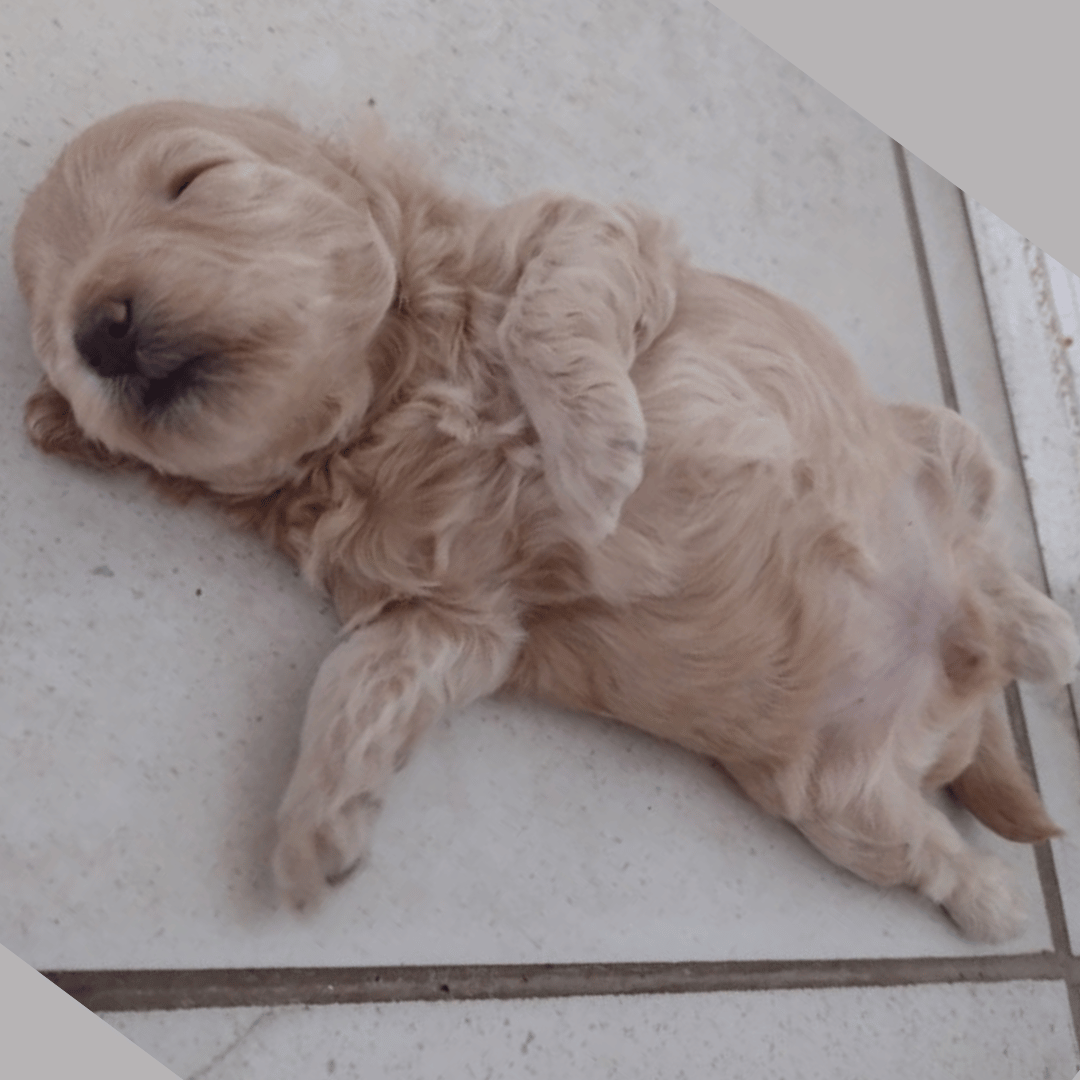 Emma past out after her first training class. Adorable!
I always tell my clients: physical play burns energy, but mental play teaches control. You can run a puppy for an hour and still have a whirlwind at home, but a few minutes of nose work or “Leave It” practice can calm them faster than a long walk. Thinking makes puppies focus, and focus helps them relax.
It happens almost every time: I leave a training session, and within five minutes, my phone buzzes with a photo of the puppy fast asleep. One round of scent games, a bit of brain work, and they’re out cold, peaceful, happy, and learning to self-soothe. That’s the magic of training the brain, not just the body.
Stop puppy biting FAQs
How do you discipline a puppy who is biting?
How do you discipline a puppy who is biting?
You don’t need to “discipline” a puppy for biting, you need to teach them what to do instead. Harsh corrections or yelling only create fear, confusion, and can lead to aggression in the future (see case study above!). Instead, calmly stop play when biting happens, wait for your puppy to settle, and then resume play gently. This teaches self-control and bite inhibition in a positive, effective way.
At what age should puppies stop biting?
At what age should puppies stop biting?
Most puppies start to bite less between 4 and 6 months of age, once their adult teeth come in and their impulse control improves. However, every puppy is different! Consistent training and providing lots of appropriate chew outlets can shorten the phase.
If you puppy is becoming and adolescent and you notice he is still biting a lot, I recommend you book a session with a Professional Dog Trainer. Some puppies grow with stress and fears and they find that chewing is their only way to soothe themselves. If this is your case, you need a program to help your puppy overcome fear and stress.
Should I tap my puppy on the nose when he bites?
Should I tap my puppy on the nose when he bites?
Absolutely not. Tapping, slapping, or holding your puppy’s mouth shut can make them afraid of hands, and fear can lead to aggression later in life. Instead, teach calmly through redirection: give a toy, pause play, or use games that reward gentle mouths. To stop puppy biting you need lots of patience and the understanding that puppies bite because they have a biological need to do so.
Is it okay to push a puppy away when biting?
Is it okay to push a puppy away when biting?
It’s better not to. Sudden movements or pushing can trigger your puppy’s chase and bite reflex, making the behavior worse. Instead, freeze briefly, avoid eye contact, and calmly redirect your puppy to a toy.
What command stops a puppy from biting?
What command stops a puppy from biting?
You can use a calm cue like “gentle” or “easy” once your puppy starts learning bite control, but the command itself isn’t magic, it’s the training behind it. Consistently marking and rewarding gentle play teaches your puppy that “gentle” means soft mouths earn praise and treats.
How do dogs say sorry after biting?
How do dogs say sorry after biting?
Dogs don’t apologize the way humans do, but they show appeasement signals, such as licking, turning their head away, lowering their body, or wagging softly. These are their ways of saying, “I didn’t mean harm.” Your best response is to stay calm and rebuild trust through gentle, predictable interactions.
Do puppies remember being punished?
Do puppies remember being punished?
Puppies remember the feeling of being punished, fear, confusion, or stress, and their brains form associations with whatever they believe caused that feeling. This is the real danger of using punishment: you might think you’re correcting biting, but your puppy could instead associate your hand with pain or fear. Over time, that can lead to defensive or aggressive behavior toward hands. So, the short answer is yes, they do remember. But the memory they create may be very different from the one you intended.
How do I stop a puppy from biting my feet and hands?
How do I stop a puppy from biting my feet and hands?
Movement triggers excitement! If your puppy chases your feet or hands, stop moving, stay still, and redirect to a toy. You can also teach a “Find It” or “Go to Mat” game to channel energy into focus and calmness instead of chasing and nipping.
How do I stop puppy biting when nothing works?
How do I stop puppy biting when nothing works?
If your puppy’s biting feels out of control, check the basics: Are they overtired, overstimulated, or under-exercised? Try calming sniffing games, structured naps, and consistent redirection. If the biting persists or worsens, reach out to a Certified Professional Dog Trainer (CPDT-KA) for one-on-one guidance, sometimes a personalized plan makes all the difference.
How do I stop puppy biting furniture?
How do I stop puppy biting furniture?
Puppies chew furniture when they’re teething, bored, or unsupervised. Offer safe chew toys (like a KONG Classic or Benebone Wishbone) and rotate them to keep things interesting. If you catch your puppy chewing furniture, redirect to an appropriate toy and reward immediately when they make the right choice.
This article was written by Natalia Rozas, Ph.D. and Certified Professional Dog Trainer (CPDT-KA #4071465) and updated on November 9th, 2025. Case studies and anecdotes are real but to protect the privacy of our clients the names and details are changed.
- Home
- Puppy Training
- Stop Puppy Biting
Other articles you might like:
Potty Training a Puppy in a Week
Potty training a puppy can be the biggest nightmare if you do it incorrectly. Use positive methods to have your doggy housetrained in about a week. Find all the information you need right here!
Effective Puppy Crate Training Schedule (With Free PDF)
Is puppy potty training a nightmare? Solve it with this step-by-step guide and FREE printable puppy crate training schedule.
Crate Training an Older Dog the Positive Way
Crate training an older dog is easy with positive methods. Adult dogs take a little longer to learn that the crate is a safe place to relax and this step-by-step guide will help you along the way.

 |
 |
 |
 |